The Three Contracts Hidden in Every Freight Quote: Incoterms and the Cost of Assumed Risk
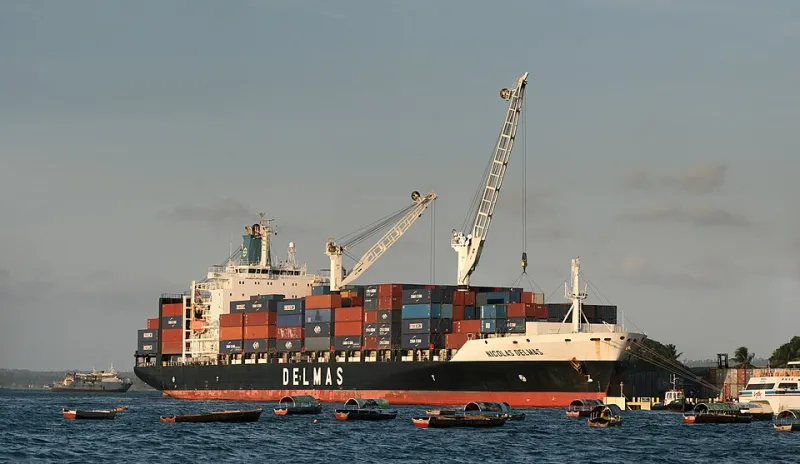
Photo: Muhammad Mahdi Karim, GFDL 1.2, via Wikimedia Commons
For a U.S. importer in 2026, the first container is rarely the hardest part. The harder part is knowing what was actually agreed before that container leaves the factory gate. A freight quote may arrive as one clean figure, but beneath it sit three distinct questions: who arranges movement, who carries the risk of loss, and who answers to U.S. customs. Incoterms are the shorthand that answers those questions—and the source of many quiet disputes when the shorthand is misunderstood.
A Quote Is Not a Transfer of Responsibility
Incoterms 2020 defines eleven trade terms, but most small and mid-sized American importers rely on a familiar few: FOB, CIF, and DDP. The danger is not that these terms are obscure. The danger is that they feel familiar. A buyer may compare an FOB Shanghai price with a CIF Savannah price and conclude that one is simply cheaper. In practice, the two quotes may describe different responsibilities, different insurance coverage, and different customs obligations.
The central distinction is between cost and risk. A seller can agree to pay for freight without agreeing to carry the risk of loss during that freight. Likewise, a seller can arrange insurance that protects the seller's interest more than the buyer's. When procurement teams evaluate only the bottom-line number, they can select a term that looks economical and still leaves the buyer exposed.
Apparel: The CIF Illusion
Consider an apparel importer in Los Angeles buying seasonal knitwear from a supplier in Vietnam. The supplier quotes CIF Long Beach. The price includes ocean freight and insurance, which feels comprehensive to a buyer accustomed to arranging everything separately. But CIF has a narrow definition of insurance. The seller is required to provide minimum cover, often under Institute Cargo Clauses C, which does not protect against every type of loss. More importantly, risk passes to the buyer when the goods are loaded on board the vessel at origin. If the container is damaged in a storm or lost in transit, the buyer may own the loss even though the seller arranged the insurance. The claim path can become complicated unless the insurance certificate is properly endorsed to the buyer.
CIF also stops short of the buyer's door. Import clearance, duties, taxes, and destination charges are generally the buyer's responsibility. For a seasonal apparel program, a customs delay in Long Beach can be more costly than the freight itself. The CIF quote did not eliminate risk; it relocated part of it and left another part unspoken.
Machinery: DDP and the Customs Catch
Now consider a machinery distributor in Dallas purchasing industrial components from a manufacturer in Germany. The supplier offers DDP Dallas. On paper, this is the most convenient term for the buyer: the seller delivers goods cleared for import, with duties paid, at the named destination. The buyer may assume there is nothing left to manage.
DDP does shift broad responsibility to the seller, but it does not transfer U.S. regulatory accountability to the seller in every circumstance. The importer of record must still be properly established, and a foreign seller may not be positioned to act as importer of record without a U.S. customs bond and a clear brokerage arrangement. If the seller lacks that infrastructure, the buyer may discover that DDP has created a customs bottleneck rather than removed one. Product compliance with U.S. standards also remains a buyer-side concern. A DDP term does not certify that the machinery meets applicable safety or environmental requirements.
DDP can be a sound choice when the seller has mature U.S. customs experience and the buyer has verified how import responsibilities will be handled. It is a poor choice when it is used to avoid asking uncomfortable questions.
Furniture: FOB and the Widest Exposure
A furniture retailer in North Carolina sources case goods from Malaysia on FOB Port Klang terms. FOB is often the default for importers who want control over freight. The buyer selects the forwarder, negotiates the ocean rate, and arranges insurance. The immediate quote looks lower because freight is not embedded in the supplier's price.
But FOB transfers risk to the buyer once the goods are on board the vessel at the named port. From that moment, the buyer bears the risk of loss or damage during ocean transit. If the retailer has not arranged marine insurance, or has arranged it with exclusions that do not match the cargo, the exposure is real. Furniture is bulky, susceptible to moisture damage, and often moved through multiple handling points. A low FOB price can become an expensive landed cost when insurance, destination charges, demurrage, and damage claims are added.
Where the Handoff Actually Happens
The disciplined approach is to read every Incoterm as a handoff point. At that point, cost and risk may separate. The buyer should map four things for each quote: the physical point where risk passes, the insurance obligation and its limits, the customs clearance responsibility, and the final delivery point. A term that names a port does not necessarily name a warehouse. A term that includes freight does not necessarily include full insurance. A term that includes duties does not necessarily include every destination charge.
At Shumpein Global Trading, this is the practical work behind a smooth first shipment: aligning the commercial invoice, the purchase order, the freight booking, and the customs entry around one clear set of obligations. The cheapest-looking term is rarely the safest. The safest term is the one the buyer can explain, line by line, before the container moves.
A Practical Review Before Booking
Before the first container is booked, confirm that the sales contract and purchase order name the Incoterms 2020 rule and a precise named place. Ask who will act as importer of record and whether the customs bond is in place. Request the insurance certificate and confirm that the buyer's interest is protected. Compare quotes on a landed-cost basis, not a freight-line basis. Finally, test the term against the buyer's actual capabilities: a retailer without a customs broker is not ready for an FOB arrangement just because the freight rate looks attractive.
Incoterms do not eliminate risk. They allocate it. The importer who understands that allocation before the first booking is the one who can negotiate from knowledge rather than from a single, deceptive number.