Mapping the Arteries of Global Commerce: Seven Shipping Lanes Shaping America's Trade Future
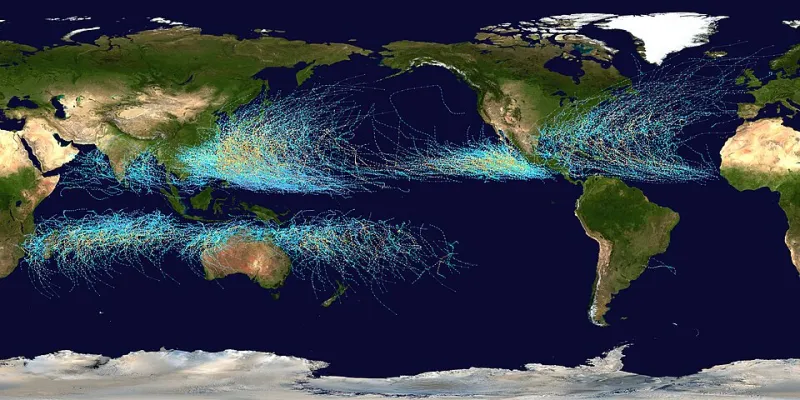
Photo: Background image: NASA this version: Nilfanion, Public domain, via Wikimedia Commons
Every product on an American shelf has traveled a corridor — a well-worn path of ocean lanes, rail lines, and border crossings that determines its cost, speed, and even its viability. For importers, distributors, and expanding brands, understanding these arteries isn't academic. It's the difference between sourcing strategically and simply reacting to freight quotes.
Here are seven corridors every US business with global ambitions should have on its radar.
1. The Trans-Pacific Express: East Asia to the US West Coast
Still the workhorse of American imports, the Asia–US West Coast lane (Los Angeles/Long Beach, Oakland, Seattle-Tacoma) moves the lion's share of consumer electronics, apparel, furniture, and e-commerce inventory. Cost drivers center on fuel surcharges, canal transit fees for ships routed via Panama, and West Coast port labor dynamics. Growth remains steady if unspectacular — but the corridor's sheer depth of carrier capacity makes it the benchmark against which all alternatives are measured.
Bottom line: Unmatched scale for high-volume consumer goods from China, Vietnam, and Korea. Watch West Coast labor negotiations and transload capacity when planning peak season.
2. The US–Mexico Corridor: The Nearshoring Powerhouse
The most dynamic story in North American trade. Laredo, Texas, now ranks among the busiest trade gateways in the Western Hemisphere, with trucks crossing daily carrying automotive components, electronics, machinery, and fresh produce. USMCA tariff preferences, shared time zones, and 1–3 day transit times (versus weeks by ocean) have made Mexico the default expansion for companies diversifying out of Asia.
Bottom line: Ideal for time-sensitive manufacturing inputs and products where engineering collaboration matters. Freight costs are lower and more predictable than trans-Pacific routes.
3. The Suez–East Coast Corridor: Europe and South Asia by Sea
The classic route linking Indian and Southeast Asian production to East Coast ports — Savannah, New York/New Jersey, Houston — via the Suez Canal. Recent security disruptions in the Red Sea have forced rerouting around the Cape of Good Hope, adding 10–14 days and meaningful cost. Product categories span textiles from India, machinery from Europe, and pharmaceuticals and chemicals in both directions.
Bottom line: Build buffer time into any India- or Europe-sourced inventory. The corridor is resilient long-term, but volatility premiums are now a fact of life.
4. The Central America–Gulf Lane: The Quiet Grower
Guatemala, Honduras, Costa Rica, and the Dominican Republic increasingly supply apparel, medical devices, and agricultural goods to Gulf and Southeast ports. Proximity — 3–5 days by ocean, days by air — plus CAFTA-DR duty preferences make this corridor attractive for labor-intensive goods and perishables.
Bottom line: A nimble complement to Asian sourcing, especially for apparel brands chasing speed-to-market and duty savings.
5. The Transatlantic Bridge: Europe to US East Coast
Mature, stable, and often overlooked in sourcing conversations — which is precisely why it rewards attention. Germany's industrial equipment, Italy's luxury goods and components, and the Netherlands' agricultural exports flow through ports like Charleston, Baltimore, and New York. Costs are comparatively low thanks to balanced two-way flows, and transit times run a predictable 10–12 days.
Bottom line: The corridor of choice for precision machinery, premium goods, and European brand partnerships. Currency swings (EUR/USD) are the main cost variable to manage.
6. The South America–US Lane: Commodities and Beyond
Brazil and Colombia anchor a corridor dominated by coffee, proteins, minerals, and increasingly — through Ecuador and Peru — fresh produce and flowers into Philadelphia, Miami, and Los Angeles. Seasonality drives pricing; reefer (refrigerated) container availability is the perennial bottleneck.
Bottom line: Essential for food and agriculture importers. Growth is being propelled by new trade agreements and expanding cold-chain infrastructure.
7. The Intra-Asia Feeder Network: Your Hidden Flexibility Layer
Less a single route than a circulatory system: the short-sea shipping network linking Chinese, Vietnamese, Thai, and Indian suppliers to regional consolidation hubs like Singapore and Busan. This is where multi-country sourcing strategies live or die — goods from three factories in three countries converge here before a single trans-Pacific sailing.
Bottom line: If you're diversifying suppliers across Asia, your freight forwarder's strength in this network directly determines your flexibility.
Turning Corridor Intelligence Into Advantage
What should a US business actually do with this map? Three moves:
- Match product to corridor, not habit. Reassess whether each SKU truly belongs on its current route. A 45-day trans-Pacific lead time may be indefensible for fashion-adjacent goods when Mexican or Central American alternatives exist.
- Price in volatility. Build corridor-specific risk premiums into landed-cost models rather than being surprised by them.
- Partner for reach. Trading companies with established presence across multiple corridors — Asia, Latin America, Europe — can shift volume between routes far faster than any single importer working alone.
Global trade will always reward those who see the map clearly. The corridors above are where the next decade of American commerce will be decided — and for businesses paying attention, that's not a risk to manage. It's an opportunity to claim.