Stamped, Fumigated, or Refused: Auditing Wood Packaging Before a Container Reaches a U.S. Port
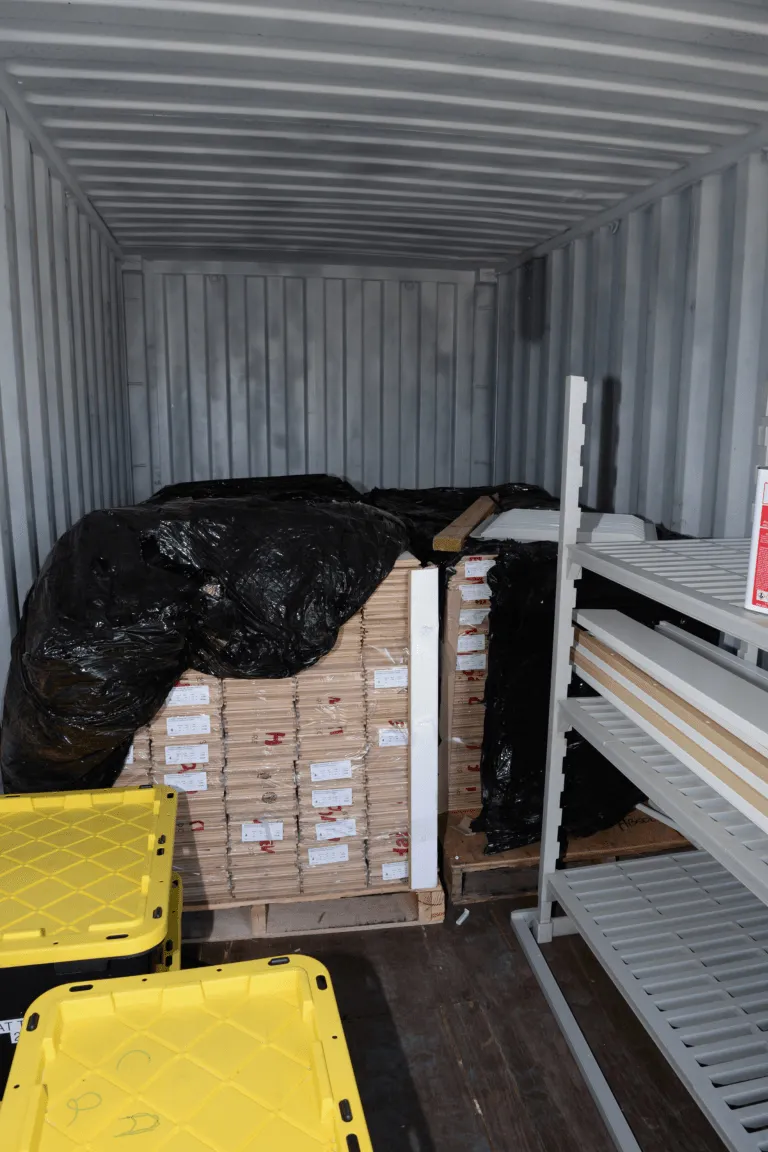
Photo: Federal Bureau of Investigation, Public domain, via Wikimedia Commons
Customs brokers have a saying that importers rarely enjoy hearing: the cargo is compliant, the pallet is not. A shipment of perfectly documented consumer goods, machined parts, or textiles can stall at a U.S. port because the wood beneath it carries an incomplete mark, a faded stamp, or no treatment record at all. The product passes inspection; the packaging fails it. For American importers whose margins rest on predictable arrival dates, that distinction is expensive.
The Rule That Rarely Reaches the Purchase Order
Wood packaging material entering the United States is regulated under the international standard known as ISPM 15, administered domestically through the U.S. Department of Agriculture's regulations and enforced at the border by U.S. Customs and Border Protection. In practical terms, solid wood packaging above a minimal thickness threshold must be either heat treated or treated with methyl bromide by an accredited provider, and then stamped with a mark that identifies the country of origin, the treatment provider, and the treatment applied.
The rule covers more than pallets. Crates, boxes, spools, blocking, bracing, and loose dunnage all fall within scope. It does not cover manufactured wood products such as plywood, particleboard, oriented strand board, or veneer, nor plastic, metal, or corrugated packaging. That exemption list is precisely where confusion begins, because a pallet built partly from processed wood and partly from solid lumber is judged on the solid lumber.
Most purchase orders say nothing about any of this. The obligation is assumed to sit with the supplier, and in many cases it does. The difficulty is that the supplier is often not the party that owns the pallet.
Who Actually Owns the Pallet?
The first audit question is ownership, and it is the one most frequently skipped. At many origin factories, pallets are supplied by a consolidator, a freight forwarder, a pallet pool, or a third-party logistics provider. The factory loads cartons onto whatever arrives at the dock. When that happens, the supplier's compliance file proves nothing about the wood in your container, because the supplier did not buy it.
Importers who have mapped this chain typically discover one of three arrangements: pallets purchased by the factory from a local provider, pallets supplied by the consolidator as part of a service, or pallets exchanged within a pool where repaired units circulate indefinitely. Each arrangement has a different failure mode. The pooled pallet is the most troublesome, because boards are replaced over time by whoever repairs it, and a single unmarked replacement board can compromise an otherwise compliant unit.
What a Failed Mark Looks Like Up Close
A compliant mark is not simply a logo. It includes the IPPC symbol, an ISO country code, a provider registration number, and a treatment code. Common failures observed in practice include illegible ink, a missing treatment code, a country code that does not match where the treatment occurred, marks applied only on one face so that they disappear when pallets are flipped, and marks that have been painted over or obscured by stretch wrap and labels.
A subtler failure is the repaired pallet. When a damaged board is replaced with untreated lumber, the unit retains its original stamp while containing noncompliant wood. Because inspectors examine units rather than individual boards, that pallet can pass a visual scan at origin and fail a closer look at destination. A related issue is loose dunnage, which is frequently cut from scrap lumber on the factory floor and almost never carries a mark.
Treatment records present a separate problem. Heat treatment is now the dominant method in most sourcing regions, though methyl bromide remains accepted and is subject to increasing restriction in several markets. What matters to the importer is not which method was used but whether a certificate exists, whether it identifies the provider, and whether its date corresponds to the pallet lot actually shipped rather than to an earlier delivery.
The Cost of Getting It Wrong
When CBP determines that wood packaging is noncompliant, the remedies are not gentle. The agency may require the shipment to be treated at the importer's expense, order it re-exported, or refuse entry. None of these outcomes is quick. Fumigation at a U.S. port requires arranging a licensed provider, moving the container to an approved location, and waiting through the treatment interval, all while storage and detention charges accrue.
The exposure compounds when shipments are consolidated. A single noncompliant pallet inside a shared container can hold cargo belonging to several importers, and the goodwill cost of that delay often exceeds the treatment invoice. Beyond the immediate shipment, a pest finding can invite closer scrutiny of subsequent entries from the same origin, and the statutory authority for civil penalties is real rather than theoretical.
A Four-Question Pre-Shipment Audit
Importers seeking a workable control can start with a short, repeatable interrogation before booking.
First, who supplies the pallets? Obtain the name of the actual provider, not the factory's assurance that everything is fine.
Second, can the provider produce a treatment certificate on request? Ask for it during the quotation stage, not after the container is loaded. A provider that cannot locate a certificate within a business day is a provider that will not locate one during a customs hold.
Third, where is the mark and will it survive handling? Request photographs of all visible faces, including the underside, taken after loading. Require that repaired pallets be replaced rather than patched with untreated boards.
Fourth, how is dunnage controlled? Specify that bracing and blocking material must be treated and marked, or that approved alternatives such as engineered wood be used.
Folding It Into the Scorecard
Wood packaging deserves a weighted line in the supplier evaluation rather than a footnote. Useful scoring elements include documentation turnaround, mark legibility from photograph samples, the existence of a written repair policy, dunnage controls, and the history of any port findings over the trailing twelve months. A quarterly photo sample, tied to container numbers and retained in a shared file, creates an evidence trail that is credible in a dispute.
Commercial terms matter as much as inspection. Purchase agreements can specify that the seller bears the cost of fumigation, storage, and re-export arising from noncompliant wood packaging, and can require notice within a defined window if pallet suppliers change. Those clauses are far easier to negotiate before the first incident than after it.
What to Do When the Hold Arrives
The response should be procedural. Notify the broker immediately, request a written statement of the options available, and compare the full cost of on-site treatment against re-export and abandonment rather than comparing only the treatment quote. Photograph the pallets before they are disturbed, preserve the treatment certificates already on file, and open the supplier conversation with evidence in hand. Resolution follows documentation; arguments do not.
The Quiet Signal
There is a reason experienced buyers treat the pallet file as a proxy. A supplier that can produce a dated treatment certificate, a legible mark, and a coherent repair policy within a day is usually a supplier that also manages packing lists, certificates of origin, and inspection reports with similar discipline. The pallet is not a trivial detail at the bottom of the container. It is a readable statement about how the organization works, and it is read by customs officers, brokers, and auditors long before anyone opens a carton.
Shumpein Global Trading works with U.S. importers to trace packaging responsibility through the supply chain and to build verification steps into supplier agreements before goods leave origin.