When the Rules Change Midstream: The Quiet Hedging Strategies of America's Trade Veterans

Photo: Metro-Goldwyn-Mayer, Public domain, via Wikimedia Commons
A Policy Environment Built on Sand
Consider the recent rhythm of American trade policy: tariff schedules announced, delayed, revised, and re-announced within a single quarter. Exclusions granted and revoked. Countries granted most-favored treatment one fiscal year and targeted the next. For companies whose margins are measured in single digits, this is not background noise. It is the operating environment.
Yet something interesting has happened. Rather than retreating from international trade, many American firms have built elaborate — and increasingly sophisticated — hedges against policy churn. At Shumpein Global Trading, we watch these strategies take shape across our client base weekly, and four of them now define the modern import playbook.
Strategy One: The Diversified Sourcing Map
The most common response is also the most durable: never let a single country account for the majority of any critical product line.
A mid-sized furniture importer we work with in North Carolina restructured its sourcing over eighteen months from a 90/10 China/Vietnam split to roughly 45/35/20 across China, Vietnam, and Malaysia. The move cost them margin in the short term — dual tooling, dual quality control, smaller volume discounts per country. But when new tariff actions shifted the economics of one lane, the company rerouted a majority of its orders within a single production cycle.
Diversification is often framed as risk management. It is more accurately described as optionality. You are paying a modest premium for the right, not the obligation, to move volume quickly when policy shifts.
Strategy Two: Tariff Engineering, Done Legitimately
Tariff engineering — designing or modifying products to land in a more favorable classification — has a long and entirely legal history in American trade. The classic case remains Ford's disassembled Model T chassis, ruled dutiable as parts rather than a complete vehicle, in a decision that reshaped how importers think about product structure.
Modern examples abound: altering country-of-origin thresholds through substantial transformation, adjusting material compositions to cross classification lines, or restructuring how goods are assembled and packaged. The critical distinction is between engineering and evasion. The former changes the product or process genuinely and documents it; the latter misrepresents it and invites penalties that dwarf any duty savings.
Companies pursuing this route should engage licensed customs counsel before, not after, the classification ruling is requested. A binding ruling from CBP costs a fraction of a penalty case.
Strategy Three: Bonded Warehouses and Foreign Trade Zones
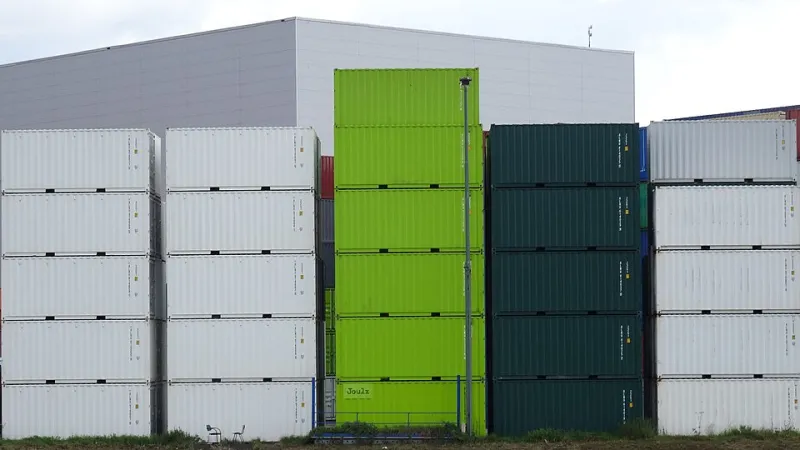
When duty rates are volatile, timing becomes a weapon. Goods held in a bonded warehouse or Foreign Trade Zone are not subject to duties until they enter U.S. commerce — and if they are re-exported, potentially never.
The strategic applications are concrete:
- Deferral. Holding inventory in an FTZ postpones duty payment until actual sale, improving working capital and buying time for rates to settle.
- Inverted tariff advantages. In FTZ manufacturing scenarios, companies can pay the lower of the finished-product or component rate.
- Re-export flexibility. Goods that face sudden punitive duties can be redirected to other markets without ever clearing U.S. customs.
For companies importing at meaningful scale, the setup costs are recovered quickly. For smaller importers, third-party FTZ operators have made the infrastructure accessible without capital investment.
Strategy Four: Pricing Architecture Built for Movement
The least glamorous hedge is the one customers feel: pricing flexibility. Companies that survived the past several years of volatility share a common trait — they never promised customers prices anchored to a static landed cost.
Some built tariff surcharge clauses into annual contracts, transparently passing through duty changes. Others widened their margin bands deliberately, absorbing swings in the short term. A few restructured to quote quarterly rather than annually. None of these are pleasant. All of them are survivable, which is the point.
The Contrarian Case: Volatility Favors the Middle
Here is the argument that surprises people: constant policy churn may structurally advantage agile mid-sized firms over both their largest and smallest competitors.
The giants — multinational retailers with rigid annual planning cycles and hundreds of millions in committed sourcing volume — move slowly. Reorienting a supply chain that spans thousands of SKUs takes quarters, not weeks. Meanwhile, the smallest importers lack the capital to hold inventory in bonded facilities, the legal budgets to pursue binding rulings, or the volume to negotiate multi-country sourcing.
The middle has neither the paralysis of scale nor the fragility of size. A firm doing $20–100 million in revenue can reroute sourcing in a season, qualify for FTZ operations, retain customs counsel, and maintain genuine optionality. Every new tariff announcement, in this view, is a redistribution of advantage from the slow to the nimble.
This is not a celebration of volatility — unpredictability taxes everyone and destabilizes the trade relationships that underpin prosperity. But it reframes the moment. Policy churn is not a storm to be endured; it is a test of organizational speed. And speed, unlike tariff schedules, is something companies can control.
What We Tell Our Partners
Our counsel to American businesses navigating this landscape is consistent: build optionality before you need it, document everything before anyone asks, and treat your landed cost as a range rather than a number. The companies that treat trade policy as a discipline — not a lottery — are the ones still standing when the next announcement lands.