From Sample Box to Loading Dock: A Rookie Importer's First Journey Across the Pacific
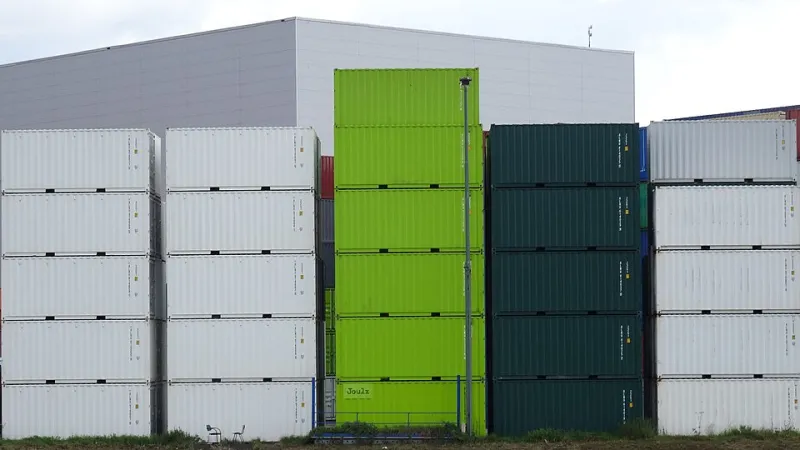
Photo: AgainErick, CC BY-SA 4.0, via Wikimedia Commons
The Box That Starts Everything
Maria Delgado runs a small home-goods boutique in Chicago's Logan Square. Last spring, she decided to stop buying from domestic distributors and import ceramic serveware directly from a manufacturer in Guangdong province. What followed was a ninety-day education in global commerce — one we reconstruct here, with her permission, as a composite guide for the thousands of American small businesses contemplating the same leap.
Her story is hypothetical in its details but universal in its shape. Nearly every first-time importer in the United States walks the same road: curiosity, a sample, a wire transfer, a moment of doubt at the port, and finally a truck backing up to a loading dock with goods that arrived exactly as promised.
Stage One: The Sample Is Not the Product
Maria's first instinct was to order a sample and judge everything from it. That instinct is half right. A sample tells you about the manufacturer's ceiling — what they can produce when they care. It tells you nothing about what the thousandth unit will look like.
Her due diligence checklist looked like this:
- Verify the business license. A fifteen-minute step that filters out most trading companies posing as factories.
- Ask for a third-party inspection report from a prior client, or commission one independently.
- Order two samples, three weeks apart. Consistency between them matters more than either one's quality.
- Confirm the sample's material specs in writing — glaze composition, dimensions, tolerance ranges.
The second sample Maria received had a slightly different rim profile than the first. That small discrepancy became the opening line of her quality agreement, and it was worth more than any handshake.
Stage Two: Payment Terms Are a Negotiation, Not a Formula
The internet is full of absolutist advice: never pay more than 30 percent up front, never wire money, never trust a first order. Reality is more textured.
Maria's supplier asked for 50 percent on order confirmation and 50 percent against a copy of the bill of lading. She countered with 30 percent and 70 percent at sight of the original documents. They settled at 30/70, with the balance paid after a pre-shipment inspection she hired a third party to conduct in person.
The lesson is not the specific split. The lesson is that payment structure is your primary leverage, and once the money moves, it evaporates. Tie every dollar to a verifiable milestone: an inspection passed, a document produced, a container sealed.
New importers should also decide early whether to pay in USD or handle currency conversion themselves. For most American small businesses, invoicing in dollars keeps things simple and predictable — but confirm this explicitly, because it is not always the default.
Stage Three: The Inspection You Pay For Is the Inspection That Counts
Maria spent roughly $300 on an in-factory inspection when her goods were 80 percent complete. The inspector found that one carton in six had inadequate foam padding — a detail that would have produced a 20 percent breakage rate on the ocean crossing, right in the middle of her holiday season.
The factory repacked. Her breakage rate on arrival was under 1 percent.
For first-timers, the rule of thumb: if the order value exceeds $5,000, an independent inspection is cheap insurance. If the goods are fragile, it is non-negotiable.
Stage Four: Paperwork Is Where Importers Actually Win or Lose
Customs is rarely the dramatic villain of import stories; more often it is a slow tax on carelessness. Maria's freight forwarder walked her through the essentials:
- Commercial invoice with accurate descriptions and declared values — under-declaring to save on duties is fraud, not a strategy.
- Harmonized System (HS) classification. Her ceramic serveware carried a specific code and duty rate; guessing wrong meant penalties or delays.
- Customs bond. As a first-time importer, she needed a continuous bond to clear goods through U.S. Customs and Border Protection.
- ISF filing, the "10+2" declaration due before the container leaves the foreign port. Miss it, and fines start accruing before your goods even touch water.
Her advice, distilled: hire a licensed customs broker for the first three shipments at minimum. The fee is trivial next to the cost of a detained container.
Stage Five: The Delivery, and the Ledger Behind It
Eighty-two days after her first inquiry, a truck pulled up to Maria's boutique with 40 cartons of serveware. Her landed cost per unit — product, freight, duties, insurance, inspection fees, broker charges — came in 34 percent below her old distributor's wholesale price.
But the real arithmetic was different. The true return included the relationships she had built, the specs she now owned, and the confidence of a completed cycle.
A First-Timer's Final Checklist
Before your first container leaves port, make sure you can answer yes to all of the following:
- Do you have written specifications the factory has acknowledged?
- Is your payment tied to milestones, with the majority due after verification?
- Have you budgeted for inspection, freight, duties, and brokerage — not just the product?
- Do you know your HS code and duty rate before ordering, not after?
- Have you built six extra weeks of buffer into your launch calendar?
The first shipment is a rite of passage. Done carefully, it converts a business from a buyer of goods into a participant in global trade — and every shipment after it gets easier.