When the Cranes Stopped: Five Small Manufacturers, Ninety Days, and the Logistics Improvisation That Kept Goods Moving
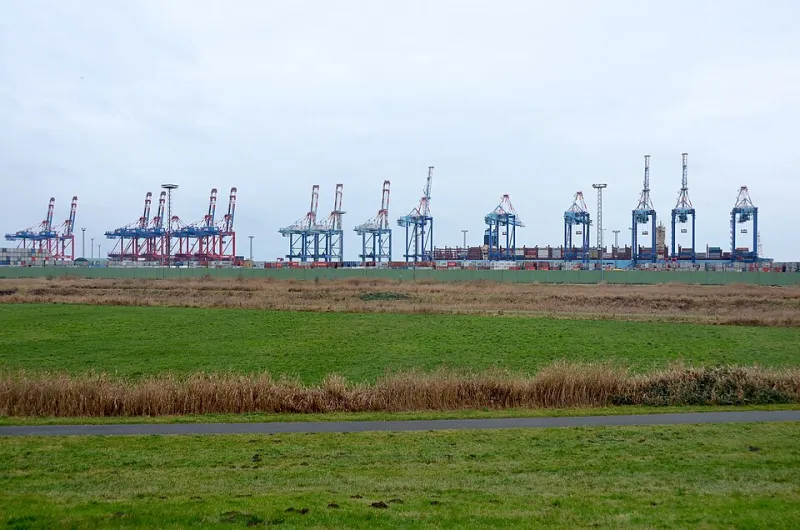
Photo: Olga Ernst, CC BY-SA 4.0, via Wikimedia Commons
For ninety days, the container cranes along one of America's busiest port complexes barely moved. For the large importers with dedicated logistics teams and contractual freight allocations, it was an expensive headache. For small manufacturers — the ones who ship a few containers a month and live margin to margin — it was an existential test.
Some didn't make it. But five companies we followed kept goods flowing the entire time, and the way they did it reads less like corporate strategy and more like resourceful, hands-on problem solving. Their stories are worth studying, because the next disruption is never a matter of if.
Case One: The Furniture Maker Who Split the Shipment
A family-owned furniture manufacturer in the Southeast faced a choice: wait out the strike and miss its retail partners' fall buy windows, or find another way. It did both, in a sense. The company split its usual single consolidated container into two smaller air-and-sea combinations — a small airfreight tranche of high-margin, time-sensitive pieces, and the bulk of the order routed through a less-congested Gulf Coast port with trucking added on the front end.
The airfreight portion hurt on cost, but it protected the retailer relationships that represented 70% of revenue. Takeaway: rank your SKUs by margin and urgency before a crisis, and pre-negotiate airfreight quotes so you're not shopping for them in a panic.
Case Two: The Food Producer's Warehouse Buffer
A specialty food manufacturer had always resented the carrying cost of extra inventory. The strike changed the math. Six months before the disruption, on the advice of its co-packer, the company built a 60-day buffer of finished goods in a third-party warehouse near its largest distribution market.
When the ports stalled, the company simply kept fulfilling from the buffer while its competitors went dark on supermarket shelves. The storage fees, once grudgingly paid, suddenly looked like the cheapest insurance in the industry. Takeaway: for shelf-stable, high-demand products, a standing buffer in a strategically located 3PL is a hedge worth pricing seriously.
Case Three: The Bike Shop Brand That Rode Rail
A small cycling components brand discovered that its freight forwarder had an intermodal rail option it had never bothered to pitch — containers moving by train to an inland distribution hub, bypassing the congested coastal gateway entirely. Transit time grew by about a week, but the goods arrived, and the brand's direct-to-consumer promise held.
Takeaway: ask your forwarder to map at least two physical routings to your market. The alternative path may be slower, but a slow delivery beats a stalled one.
Case Four: The Toy Company's Communication Play
A boutique toy maker couldn't fully dodge the disruption, but it refused to let customers find out from silence. The company sent proactive updates to every wholesale account, revised promised ship dates honestly, and offered a modest goodwill credit on delayed orders. Buyers, who were fielding worse news from larger suppliers, rewarded the transparency with expanded spring orders.
Takeaway: contingency planning isn't only physical. A communication protocol — who calls whom, how often, with what message — is part of the supply chain.
Case Five: The Hardware Firm That Shared a Container
A fastener distributor pooled orders with two non-competing importers through its customs broker, sharing a single rerouted container via an alternate gateway. Each company paid a third of the diversion cost. It was an arrangement none had considered before, brokered by a forwarder who simply asked the question. Takeaway: your broker and forwarder know other shippers with complementary lanes. In a disruption, consolidation is a tool, not a compromise.
Building Your Own Playbook
Across these five stories, a common architecture emerges:
- Tier your products by margin and customer criticality before the crisis.
- Pre-position inventory where it can serve demand without touching a port.
- Map alternate routings — different gateways, different modes — and keep quotes warm.
- Communicate early and honestly with customers; goodwill compounds.
- Lean on your intermediaries. Brokers, forwarders, and 3PLs solve these problems daily; let them.
None of the five companies had a formal business-continuity plan in a binder. What they had was flexibility, honest math, and relationships built before the trouble started. That combination — more than any software dashboard — is what carried them through ninety days of stopped cranes.
The next port disruption, labor action, or geopolitical surprise is already being scheduled somewhere. The manufacturers who thrive will be the ones who spent a quiet afternoon, well in advance, deciding exactly what they'd do.